
Understanding Executive Function
How children plan, remember, shift, regulate and turn what they know into action
A child can understand an instruction and still forget the second step. They can know how to complete an assignment and still be unable to begin. They can explain a rule when calm, then find it difficult to use that rule when the game changes.
These moments can be confusing for adults. If a child knows what to do, why do they not simply do it?
Often, the missing piece is not knowledge, intelligence or effort. The task may be placing heavy demands on executive function: the group of mental processes that helps us hold information in mind, direct attention, pause before acting, adjust to change, plan and work towards a goal.
Executive function is involved in much more than schoolwork. Children use it when they get ready in the morning, join a game, organise what they want to say, cope with a change of plan, pack a school bag or decide what to do first.
Understanding these demands can change the way adults respond. Instead of asking only, “Why didn’t you do it?”, we can ask, “Which part of this task is difficult to manage, and what support would make it more accessible?”
What is executive function?
Executive function is not one single skill. It is an umbrella term for processes that help us manage information and behaviour in order to reach a goal.
The Australian Government Department of Education describes executive function as foundational to children’s development. Its information for families explains that these skills are involved in planning, focusing attention, remembering instructions and juggling multiple tasks.
Many explanations group the foundations of executive function into three closely connected areas:
Working memory
Working memory allows us to hold information in mind briefly and use it.
A child may use working memory to:
- remember the steps of an instruction while carrying them out;
- keep the beginning of a sentence in mind while listening to the end;
- hold a question in mind while finding the relevant information;
- remember where they are in a story, calculation or routine; or
- compare two ideas before making a choice.
Working memory is not the same as remembering an event from last year. It is the mental workspace used while a task is happening.
Inhibitory control
Inhibitory control helps a person pause, filter competing information and resist an immediate response when another action is needed.
A child may use it to:
- wait for a conversational turn;
- ignore a nearby distraction long enough to finish a step;
- stop an answer that no longer fits;
- keep playing within the agreed rules; or
- pause before acting when frustrated.
This does not mean children should be expected to remain still, quiet or compliant at all times. Movement, doodling, fidgeting or looking away may sometimes help a child regulate and participate. The useful question is whether the child can access the activity, not whether their attention looks a particular way.
Cognitive flexibility
Cognitive flexibility helps us shift attention, consider another perspective and adapt when circumstances change.
A child may use it to:
- move from one activity to another;
- try a different strategy when the first one does not work;
- adjust to a change in routine;
- understand that another person may have different information; or
- revise an idea after receiving new information.
The Center on the Developing Child at Harvard University describes working memory, mental flexibility and self-control as core parts of executive function and self-regulation. These capacities develop over time, including through adolescence and into early adulthood.
From core processes to everyday skills
Parents and teachers often hear a longer list of executive skills: planning, organisation, task initiation, time management, emotional regulation, sustained attention and self-monitoring.
These are useful ways to describe what executive function looks like in daily life. They are not separate boxes operating alone. Most activities require several processes at once.
For example, completing a school project might involve:
- understanding the task;
- identifying the end goal;
- deciding what to do first;
- estimating how long each part may take;
- gathering materials;
- holding instructions in mind;
- resisting distractions;
- noticing when the plan is not working;
- changing strategy; and
- checking the finished work.
“Do your project” sounds like one instruction. From an executive-function perspective, it is a chain of decisions, actions and adjustments.
Knowing what to do is not the same as being able to do it
Executive function helps children use their knowledge in the moment.
A child may be able to tell you every step of the morning routine at dinner time, then lose track of those steps during a rushed morning. A student may answer questions accurately during a discussion but submit very little written work. A teenager may genuinely intend to begin an assignment after school, yet become stuck when faced with an unclear starting point.
This difference between knowing and doing is important. Repeating the rule, increasing pressure or removing support may not address the process that is getting in the way.
Performance can also vary considerably. A child might manage a task when it is familiar, interesting, visually supported or completed one-to-one, but struggle when it is new, language-heavy, noisy, time-limited or emotionally demanding.
Variable performance does not mean the difficulty is invented. It gives useful information about the conditions in which the child can access their skills.
What executive-function demands can look like
There is no single “executive-function behaviour”. The same visible difficulty can have several possible explanations, and the pattern across tasks and settings matters more than one isolated moment.
During the morning routine
A child may:
- begin getting dressed, then become absorbed in something else;
- need several reminders for a routine they know well;
- collect one item but forget the others;
- become overwhelmed when the usual order changes; or
- struggle to estimate how much time remains.
In the classroom
A student may:
- lose part of a multi-step instruction;
- take a long time to begin independent work;
- have ideas but find it hard to organise them;
- forget materials, deadlines or where work was saved;
- find transitions harder than the lesson itself;
- rush without checking, or check repeatedly without finishing; or
- appear attentive but not retain the information.
During homework
A child or teenager may:
- avoid a large or unclear task;
- focus on a small detail and lose sight of the main goal;
- underestimate the time required;
- find it difficult to choose which assignment has priority;
- depend on an adult to create the starting structure; or
- become distressed after one mistake or unexpected problem.
In play and relationships
Executive function can also be involved when children:
- remember and follow changing game rules;
- wait, negotiate and take turns;
- shift from their own idea to a shared plan;
- notice how their actions affect the interaction;
- repair a misunderstanding; or
- generate another option when a peer says no.
These situations also rely on language, social understanding, sensory regulation and emotional safety. Executive function is one part of the picture, not an explanation for every difficulty.

The connection between executive function and communication
Communication places significant demands on attention, memory, flexibility and organisation.
Consider a teacher asking:
“After you finish the paragraph, underline the key words, compare your answer with your partner and be ready to explain why you chose them.”
To follow this instruction, a student must understand the vocabulary and sentence structure, hold several steps in mind, complete them in order, shift from individual to partner work and prepare an explanation.
If the student misses a step, the difficulty might involve language comprehension, working memory, attention, processing time, hearing, the classroom environment or a combination of these. Observation and assessment help separate these possibilities.
Executive function may also be involved when a child:
- plans what to say before speaking;
- selects the most relevant details;
- puts events in sequence;
- stays with the topic while listening to another person;
- shifts interpretation when new information is added;
- finds a different way to explain something after a misunderstanding; or
- organises ideas for writing.
Research has found relationships between executive processes and language, but the relationship is complex and does not point to one simple direction of cause. A longitudinal study available through PubMed examined how executive function and language skills develop together in children with a range of language abilities. A study of 5- and 6-year-olds also found associations between working memory and aspects of narrative performance (European Journal of Investigation in Health, Psychology and Education).
For a practical example of how attention, processing, understanding and remembering work together, read Why Kids “Don’t Listen” — Understanding Attention & Processing.
Executive-function differences are not a diagnosis
Executive-function difficulties can occur in many situations. They may be associated with ADHD, autism, developmental language disorder, learning differences, intellectual disability, anxiety, sleep difficulties, stress or acquired brain injury. They can also appear when a task is not developmentally matched, when expectations are unclear or when the environment creates more demand than the child can currently manage.
Not every child who forgets instructions has an executive-function difficulty. Not every child with an executive-function difference has ADHD. A checklist or social-media post cannot determine the cause.
It is also important not to treat executive function as a measure of intelligence or character. A child can be curious, capable and knowledgeable while needing substantial support to initiate, organise or complete tasks. Speakable’s article Why Smart Teens Still Struggle: Executive Function & Independence explores this distinction during adolescence.
Why context changes performance
Executive skills are easier to access in some conditions than others. Performance may change with:
- interest and personal relevance;
- familiarity with the task;
- number and complexity of steps;
- spoken-language load;
- visual support;
- background noise and interruptions;
- time pressure;
- sensory needs;
- fatigue, hunger, pain or illness;
- anxiety, uncertainty or strong emotion;
- the availability of a calm adult; and
- whether the child has helped shape the plan.
Adults often notice that a child can focus for a long time on a preferred activity but only briefly on homework. This does not tell us that the child can direct attention equally easily in every context. Interest may provide a clear goal and immediate feedback, while homework may require the child to generate structure, tolerate uncertainty and delay the reward.
The aim is not to remove every challenge. It is to understand the demand well enough to provide support that allows the child to participate and gradually build strategies.
Support the skill before increasing the pressure
Effective support often makes invisible task demands visible. It moves information out of the child’s head and into the environment.
1. Make the first step clear
“Start your homework” may still leave the child deciding what subject, which task, where to find it and what materials are needed.
Try:
“Open the assignment page. Then we’ll choose the first question.”
The first step should be small enough to begin, not a shortened version of the whole project.
2. Reduce the amount to hold in mind
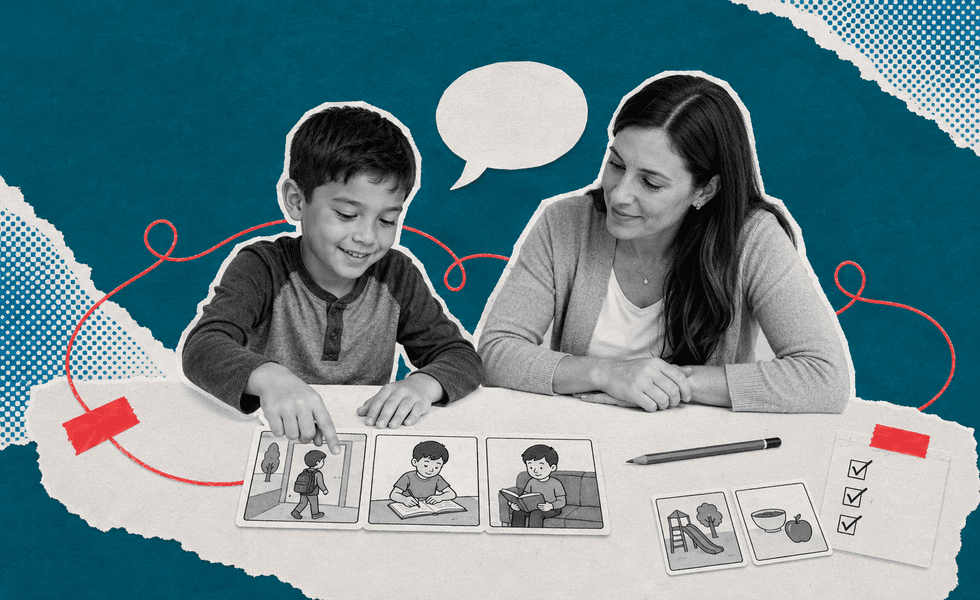
Give one or two manageable steps, or provide the full sequence visually so the child does not have to remember it all.
Useful supports can include:
- a picture schedule;
- a written checklist;
- a model of the finished task;
- key words on a whiteboard;
- a timer or time marker;
- colour coding;
- a “now / next / later” plan; or
- photos showing where materials belong.
Visual support is not cheating. It is an access tool. Adults also use calendars, maps, alarms and lists to reduce memory and planning demands.
3. Check understanding without turning it into a test
Instead of asking only, “Do you understand?”, invite the child to show the plan in an accessible way.
You might say:
“What are you going to do first?”
“Would you like to tell me, point to the step or show me?”
If they cannot show the plan, rephrase, demonstrate or reduce the information. Avoid requiring the child to repeat a long instruction word for word when that is not the goal.
4. Preview transitions
Transitions require stopping one mental set and beginning another. A warning can help, but it needs to be meaningful.
Try combining:
- a predictable signal;
- a concrete time marker;
- information about what is ending;
- information about what comes next; and
- a role for the child in the transition.
For example:
“When this song finishes, it’s time to save the game. Would you like to carry the drink bottle or the library bag to the car?”
Some children prefer a direct instruction. Others benefit from choice. Support should fit the individual rather than following one script.
5. Plan during a calm moment
The middle of an overwhelming task is rarely the best time to teach a new planning system.
Later, reflect together:
- Where did the task become difficult?
- What helped even a little?
- Was the first step clear?
- Was there too much to remember?
- Would a visual, example, break or different environment help next time?
The purpose is problem-solving, not reviewing everything the child did wrong.
6. Use co-regulation and shared problem-solving
Children often borrow structure from adults before they can create and maintain it independently. An adult might organise the space, reduce language, write the plan or help estimate time.
This is not the same as completing the task for the child. The adult is supporting the management process so the child can participate in the meaningful part of the activity.
7. Build independence by changing one part at a time
Removing all support at once can reveal that a system was doing useful work; it does not necessarily show that the child has “become dependent”.
Instead, gradually shift responsibility. For example:
- the adult writes the checklist and completes it with the child;
- the child chooses the order while the adult writes;
- the child creates the checklist from a template;
- the child uses the checklist with one reminder; and
- the child decides whether the checklist is still useful.
The endpoint is not doing everything without tools. Independent adults use tools strategically. A more useful goal is knowing which supports help and how to access them.
Practical support at home
Choose one routine that regularly creates difficulty. Trying to redesign the entire day can become another executive-function challenge for everyone.
For a morning routine, you might:
- prepare key items in the same visible place;
- use a short photo or word sequence;
- reduce unrelated instructions;
- build in transition time;
- use one agreed reminder rather than repeated prompts; and
- review the system with the child after several days.
For homework, you might:
- begin with a two-minute planning check;
- separate “decide what to do” from “do the work”;
- break large assignments into visible mini-deadlines;
- include planned movement or sensory breaks;
- create a clear finish point; and
- keep materials accessible.
If ADHD is part of your child’s profile, Raising Children Network’s guidance on routines offers Australian, parent-focused suggestions. Speakable also has a practical article on Supporting Kids with ADHD at Home.
Practical support at school
School adjustments should respond to the student’s individual pattern, not just a label.
Depending on the task, helpful options might include:
- shorter instructions paired with a visual reference;
- written steps that remain available after the teacher has spoken;
- examples of completed work;
- explicit teaching of how to plan a response;
- reduced copying demands;
- advance notice of significant changes;
- help identifying priorities;
- access to a quieter working space;
- structured check-in points during a longer project;
- additional processing time; or
- different ways to demonstrate understanding.
A useful support plan describes what adults will provide, not only what the student is expected to improve.
For example, “Sam will be more organised” is difficult to act on. “At the beginning of independent work, Sam will receive a three-step task card and identify the first step with the teacher” gives the team something concrete to try and review.
When speech pathology may be relevant
Speech pathologists do not diagnose every cause of executive-function difficulty, and executive function is not solely a speech pathology area. However, a speech pathologist may be relevant when the main concerns involve communication, language or literacy, such as:
- understanding complex instructions;
- holding and sequencing spoken information;
- organising an explanation or narrative;
- selecting relevant information;
- planning spoken or written language;
- using language to solve problems;
- repairing misunderstandings; or
- showing knowledge through classroom communication.
Assessment can explore whether a difficulty is more evident when information is spoken, written, unfamiliar, lengthy or presented quickly. It can also identify supports that help the child understand and express ideas.
Speakable’s Executive Functioning Explained: Why It Matters for Learning looks more closely at school participation, while Why Some Children Understand More Than They Can Say explores the demands involved in organising and expressing knowledge.
When to seek broader support
Consider discussing your observations with the child’s teacher, GP, paediatrician or relevant allied-health professional when difficulties are persistent, occur across important routines or significantly affect:
- learning and participation;
- communication;
- family routines;
- friendships;
- emotional wellbeing;
- independence; or
- the child’s confidence.
Different professionals examine different parts of the picture. Depending on the concern, a team might include a speech pathologist, psychologist, occupational therapist, paediatrician, GP, teacher or learning-support professional.
Bring specific examples rather than only a broad label. Useful information includes:
- which tasks are difficult;
- when the difficulty occurs;
- what the child can manage independently;
- what kind of prompt or support helps;
- whether the pattern changes across settings; and
- what the child says about the experience.
The child’s perspective matters. They may describe forgetting, not knowing where to start, feeling rushed, losing track, becoming stuck between choices or using so much energy to manage the environment that little remains for the task.
Look for the demand, not a character flaw
Understanding executive function gives adults a more useful way to interpret the gap between a child’s knowledge and their performance.
The goal is not perfect focus, constant productivity or independence without tools. It is to help each child access routines, communication and learning with supports that respect their development and individual needs.
A forgotten instruction may need to be made visible. A delayed start may need a clearer first step. Difficulty with change may need preparation and time. A disorganised explanation may need a structure for holding and sequencing ideas.
When we identify the demand, we can respond with curiosity instead of blame — and help the child discover strategies that work in real life.
If your child is finding it difficult to follow information, organise ideas or show what they know, Speakable can help explore the communication and language demands involved and develop practical strategies for home and school.
Contact Speakable to start a conversation.