
Curiosity Is a Skill: How Parents Can Encourage It Every Day
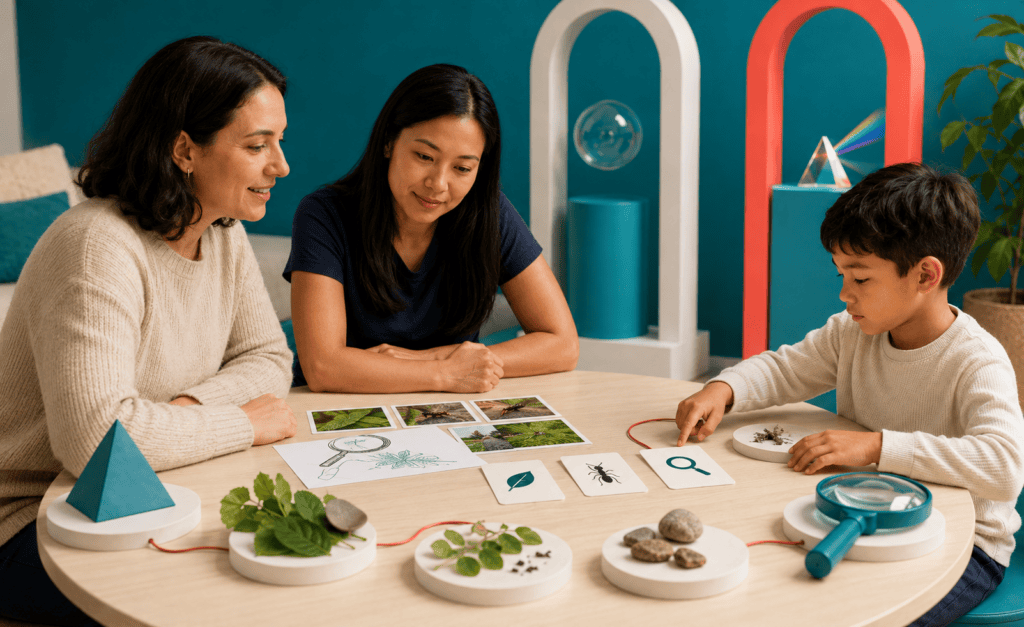
Your child stops halfway to the car because they have noticed a trail of ants.
They crouch down, watch where the ants are going and move a leaf closer to the line. Perhaps they ask, “Where are they taking it?” Perhaps they do not say anything at all. They might point, take a photo, follow the trail or return to the same spot the next day.
That moment is curiosity in action.
Curiosity is often imagined as a child asking question after question. But it can also look like observing closely, repeating an experiment, sorting objects, revisiting a favourite topic or trying a different solution.
In this article, calling curiosity a skill does not mean it is a milestone that every child should demonstrate in the same way. It means that the habits around curiosity—pausing, noticing, asking, exploring, predicting and reflecting—can be encouraged through everyday opportunities and supportive communication.
Parents do not need special science equipment or a schedule full of educational activities. The most useful starting point is often much simpler: notice what has captured your child’s attention, make room for their way of communicating and explore alongside them.
What does curiosity help children practise?
Curiosity creates a reason to learn. A child notices that something does not match what they expected, wants to know more and begins exploring the gap between what they know and what they have just discovered.
The Australian Curriculum’s Critical and Creative Thinking capability describes inquisitiveness alongside flexibility, persistence and a readiness to try new approaches. Its learning continuum is organised around inquiring, generating, analysing and reflecting.
In everyday life, curiosity may give children opportunities to notice details, connect new information with previous experiences, ask or indicate a question, predict, compare, test an idea and revise an explanation.
These processes appear in play, reading, conversation, cooking, building, art, nature, daily routines and classroom learning. The Australian Government Department of Education explains that inquiry-based learning involves investigating questions and problems, interpreting evidence, forming explanations and communicating findings.
Curiosity is not limited to academic topics. A child may wonder how a zipper works, why a character made a particular choice, where a family recipe came from, what makes someone laugh or how to build a safe place for a toy animal. What matters is the process of noticing, exploring and making meaning.
Curiosity does not always sound like “why?”
Some children express curiosity with lots of spoken questions. Others show it more quietly or through a different communication mode.
A child might:
- look closely at a moving shadow;
- place objects into precise groups;
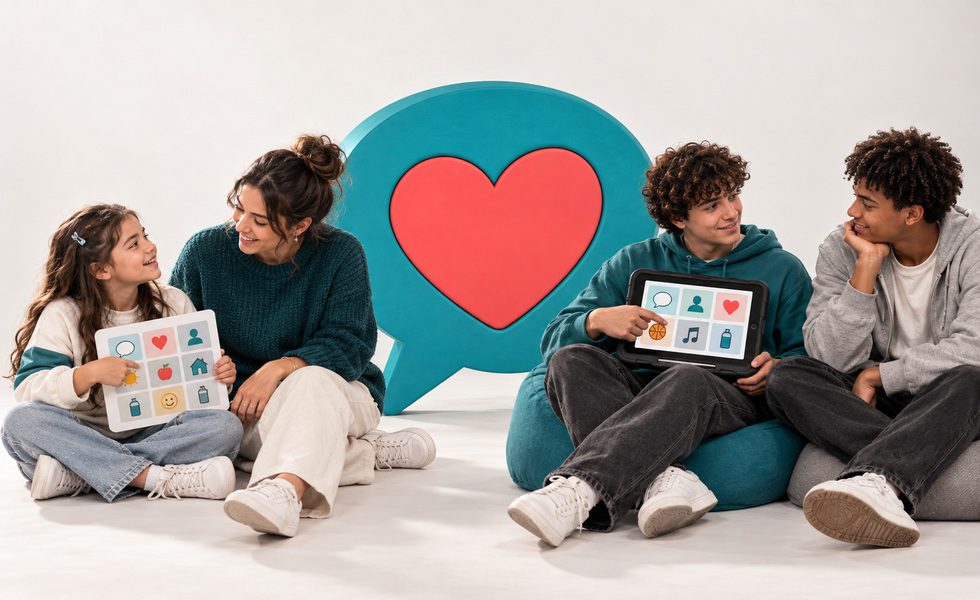
- use gesture, facial expression or an AAC symbol to show that something is unexpected;
- draw several versions of an idea;
- repeat an action to see whether the result stays the same;
- bring an object to an adult without explaining why;
- search for more information or talk in depth about a strong interest; or
- watch for a long time before deciding to participate.
None of these ways is less thoughtful because it is not a spoken question.
A child who speaks very little may be intensely interested. A child who has many facts about one topic may be using that interest to notice patterns and form connections. A child who does not respond immediately may still be processing the experience or deciding how to communicate.
The goal is not to make curiosity look more typical. It is to recognise how this particular child explores and to offer communication options that allow them to participate. Speakable’s article on neurodiversity-affirming therapy explains why support should respect different ways of thinking and communicating rather than asking children to become someone else.
Communication gives curiosity somewhere to go
Curiosity begins with interest, but communication can help a child develop and share the idea.
Language and other communication tools can help children label what they notice, describe a difference, connect cause and effect, ask for information, predict, explain what they tried and invite someone else into the discovery.
For example, a child watching ice melt might use words such as cold, wet, smaller, faster and because. They might also point to a before-and-after picture, draw the changing shape, move a symbol from solid to water or demonstrate what happened with their hands.
Communication does not have to come before exploration. A child can begin with objects, movement or observation and add words or symbols later. Being able to show an idea first may make it easier to discuss.
This is one reason curiosity and language can support each other. Interesting experiences give communication a purpose, while accessible communication helps children organise, extend and revisit what they are discovering.
How parents can encourage curiosity every day
Follow the interest before extending it
Before introducing a new question or teaching point, pause to see what the child is already attending to.
If they are spinning the wheels of a toy car, their interest may be in movement rather than its colour or name. Repeatedly filling a container may be an exploration of volume, sound or weight.
You could join with a simple comment:
“The wheel keeps spinning.”
or:
“You filled it right to the top.”
Following the child’s lead does not mean that the adult can never introduce a new idea. It means beginning from the child’s focus so the extension feels connected rather than imposed.
Comment before asking another question
Adults often try to encourage learning by asking many questions:
“What is that?”
“What colour is it?”
“Why did it fall?”
“What will you do next?”
Questions can be useful, but several in a row may make an activity feel like a quiz—especially for a child who needs more processing time.
Try balancing questions with observations: “That one rolled much further” or “You found another way to hold the pieces together.”
Comments provide language without demanding an answer. They may also give the child a natural opening to add a gesture, word, idea or correction.
Speakable’s article Why Talking With Your Child Matters More Than You Think explores how everyday back-and-forth interaction can support language without turning conversation into constant testing.
Use “I wonder…” as an invitation
“I wonder…” communicates interest without suggesting that the adult is testing for one correct answer.
Try:
- “I wonder where that ant is going.”
- “I wonder which lid will fit.”
- “I wonder what the character might do next.”
- “I wonder whether we could build it another way.”
The child does not have to answer verbally. They might look, point, test, draw, choose between two options or simply continue observing.
If an open-ended invitation is too broad, make the next step more concrete:
“Do you think it will roll further on the rug or the floor?”
Showing the two choices can make the idea easier to process while still allowing the child to predict.
Allow real thinking time
After a question or comment, wait.
Children may need time to shift attention, understand the language, decide what they think and work out how to respond. Repeating the question immediately can restart that process.
A pause also shows that the child’s contribution is worth waiting for. If a spoken answer does not come, offer another route:
“You can tell me, show me or draw it.”
Model curiosity without taking over
Children can learn what wondering sounds like when adults make their own thinking visible.
For example:
“I thought the big lid would fit, but it doesn’t. I might compare the edges.”
“I don’t know why the plant is leaning. Maybe it is growing towards the light. How could we check?”
“That ending surprised me. I want to look back for clues.”
This models uncertainty, prediction and revision. It also communicates that adults do not always know the answer immediately—and that changing an idea is part of learning, not a mistake to hide.
Make room for trying, not just answering
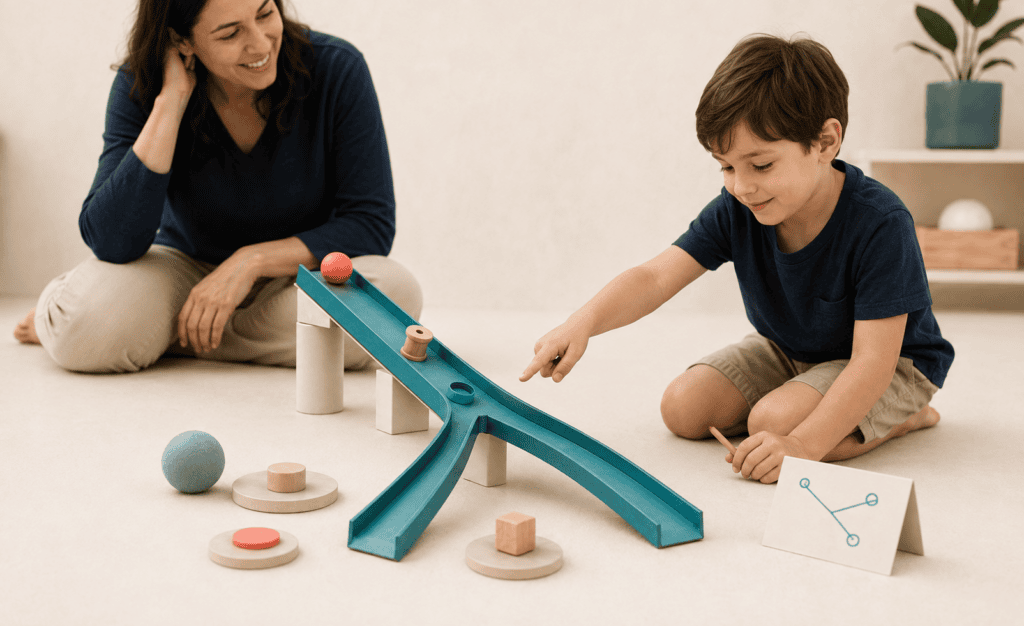
Curiosity develops through action as well as conversation.
Instead of explaining how something works straight away, consider whether the child can safely explore it:
- test which paper plane travels further;
- compare what happens to ice in sun and shade;
- change the base of a block tower;
- sort household objects using a rule the child chooses; or
- build a shelter and test it with a spray bottle “rainstorm”.
The NSW Department of Education describes learning through play as creating opportunities for children to explore, experiment, question and discover concepts in playful ways.
The aim is not to produce a perfect experiment. It is to make space for the child to notice what happened and decide what they might try next.
Revisit the question later
Not every question needs an instant answer.
You might say:
“That is an interesting question. Let’s take a photo so we remember it.”
or:
“I’m not sure. How could we find out?”
You could look in a book, ask someone, search together, test an idea or return to the observation another day.
Revisiting shows that questions can lead to an ongoing process rather than a quick adult explanation.
Read for discovery as well as practice
Books offer unfamiliar experiences, perspectives and questions that may not arise in daily routines. Pause when the child notices something. In a story, wonder about a character’s choices; in non-fiction, connect a picture with something the child has seen.
The Raising Children Network notes that reading and storytelling can support imagination, curiosity, language and learning. It also encourages families to share stories and books in the language they are most comfortable using.
Use the languages that support the richest connection
Curiosity does not need to happen in English.
Families can wonder, explain, read and search in their home languages. A child might ask in one language and discuss the idea in another. Parents can use the language in which they can respond most naturally and enjoy the conversation.
Respect sensory and regulation needs
An activity that looks exciting to one child may feel noisy, messy, unpredictable or uncomfortable to another.
Curiosity is easier to express when the child can access the experience. This might mean watching before joining, using tools instead of touching a texture, reducing background noise, showing the steps visually, allowing breaks or choosing a preferred topic.
Adapting the environment is not reducing the learning. It can give the child a more workable way to participate.
Everyday moments that can become curiosity invitations
Curiosity does not require an extra item on the family schedule. It can grow from moments that are already happening.
| Everyday moment | What the child might explore | A low-pressure invitation |
|---|---|---|
| Getting dressed | Weather, materials and comfort | “This jumper feels different from that one.” |
| Preparing food | Change, measurement, sequence and culture | “I wonder what will change when we heat it.” |
| Travelling | Routes, signs, patterns and communities | “We took a different road today.” |
| Bath or water play | Floating, sinking, volume and movement | “That container emptied much faster.” |
| Reading together | Motives, predictions, facts and new perspectives | “That was not what I expected.” |
| Tidying | Categories, systems and problem-solving | “You found your own way to group those.” |
| Outdoor time | Weather, plants, animals, sound and change | “This leaf has a pattern underneath.” |
| Building or drawing | Planning, testing, spatial relationships and imagination | “You changed your design.” |
The invitation is not a script the child must answer. It simply leaves the door open for noticing and shared exploration.
For more play-based language ideas, Speakable’s Vocabulary Growth Through Play shows how games and everyday play can create meaningful opportunities to learn and use words.
What can make curiosity feel like pressure?
Some common patterns can unintentionally shift the focus from exploration to performance.
Watch for these common patterns
- Questions with known answers: repeatedly checking what the adult already knows can feel like assessment. Mix these with genuine questions, comments and experiments.
- Correcting every detail: if a child says “It goed faster”, “Yes, it went faster on the smooth floor” models the language while keeping attention on the idea.
- Rushing to the answer: immediate explanations leave less room to predict, test or revise. When it is safe, consider how the child might find out first.
- Praising only correctness: notice the process too—“You looked closely” or “You tried a second idea”.
- Expecting curiosity on demand: tiredness, stress, sensory load and communication demands can affect participation. Allow the child to decline or return later.
When communication difficulties may hide curiosity
Sometimes a child appears not to have ideas because the activity depends heavily on understanding or expressing language.
They may have difficulty:
- understanding broad questions;
- learning or retrieving vocabulary;
- organising an explanation;
- holding several parts of a question in mind;
- asking for clarification; or
- joining a fast group discussion.
Parents may notice that the child explores actively but gives very short answers, communicates more through actions than explanations, becomes frustrated when questioned, or shows much more knowledge around familiar interests than in open-ended tasks.
These patterns do not have one automatic explanation. Language, speech, attention, working memory, literacy, anxiety, sensory demands, familiarity and the communication environment may all influence what the child is able to show in that moment.
Helpful supports can include one question at a time, extra processing time, real objects, photographs, word banks, sentence starters, drawing, gesture, typing or AAC. The Victorian Department of Education includes visual supports, models, word banks and sentence starters among its strategies for students with language difficulties.
When might a speech pathologist help?
It may be useful to speak with a speech pathologist when communication difficulties regularly affect a child’s ability to ask questions, understand explanations, share discoveries, participate in learning or connect with other people.
A speech pathologist may explore areas such as:
- understanding questions and concepts;
- learning and retrieving vocabulary;
- organising sentences, explanations and stories;
- using language for comparing, predicting and reasoning;
- asking for help or clarification; and
- access to visuals or AAC.
Assessment and support should consider the child’s strengths, interests, languages, preferred communication methods and the environments in which communication is easier or more difficult.
Healthdirect Australia provides an overview of speech pathology and the communication areas speech pathologists may support. Speakable’s article on expressive language also explains how visuals, modelling, time and meaningful interaction can help children share their ideas.
Seeking advice is not about deciding that a child is “not curious enough”. It is about understanding whether communication demands are making it harder for them to explore, participate or show what they know.
Curiosity grows in connection
Parents do not need to have every answer. They do not need to create a lesson from every question or fill the home with special resources.
Curiosity can be encouraged in smaller ways: pause when your child notices something, follow an interest a little longer, make an observation, wonder aloud, allow time, offer more than one way to respond and treat unexpected results as something worth exploring.
Most importantly, stay interested in how your child thinks—not only whether they produce the answer you expected.
When children have room to notice, test, communicate and change their minds, everyday experiences can become opportunities for discovery.
If your child has ideas but finds it difficult to understand questions, organise explanations or communicate what they are thinking, Speakable can help you explore what may be getting in the way and identify practical supports for home and school.
Contact Speakable to start a conversation.