
Is Your Child Losing Confidence at School? Signs to Watch For
Your child sits down to begin their homework, looks at the page and quickly pushes it away.
“I can’t do this.”
Perhaps they used to give things a go but now avoid certain subjects. Maybe they no longer ask for help, compare themselves with classmates or dismiss schoolwork as “boring” before they have even started.
One difficult afternoon does not necessarily mean that a child is losing confidence. But when the same responses happen repeatedly, it can be helpful to look beyond the behaviour and ask what the child might be experiencing.
What does confidence at school look like?
School confidence is not about being the most outgoing child in the classroom, always putting a hand up or getting the highest marks.
It can look like being able to:
- attempt an unfamiliar task
- make a mistake without feeling defeated
- ask for clarification
- share an idea in a comfortable way
- communicate when something is difficult
- use available support
- return to a task after a setback
As children move through primary school, they often become more aware of how they are performing and may begin comparing themselves with classmates. The Raising Children Network’s information about self-esteem explains that school, learning, friendships and comparisons can all influence how children see themselves.
Confidence can change as school demands, environments and support needs change. This does not mean that confidence is permanently lost.
Confidence can change quietly
Some children will say directly that they feel worried or incapable. Others communicate this through their behaviour.
A child might avoid a task because it has repeatedly felt confusing, exhausting or unpredictable. They might stop asking for help because they do not know how to explain what is difficult—or because asking has started to feel uncomfortable.
These behaviours should not automatically be interpreted as laziness, lack of interest or unwillingness to learn.
One sign alone does not confirm a problem. Look for patterns that continue over time, appear in particular learning situations or begin to affect participation and wellbeing.
Signs that your child’s school confidence may be changing
1. They avoid tasks they previously attempted
Avoidance can take many forms. A child might:
- delay getting started
- repeatedly leave the table
- rush through the activity
- change the subject
- joke about not caring
- become upset before looking at the task
- describe every difficult activity as “boring”
The important question is not simply, “Why won’t they do it?” It is, “What happens when they try?”
2. They stop asking for help
A child who once asked questions might begin sitting quietly, copying what others are doing or waiting for an adult to notice they are stuck.
Help-seeking is a communication skill. Children need to recognise that something is difficult, work out what kind of help they need and communicate this to another person.
Be You’s information about help-seeking at school describes asking for assistance as a positive coping strategy that can apply to learning, relationships and wellbeing.
Not asking for help does not always mean that help is unnecessary.
3. Their self-talk becomes more negative
Parents might hear statements such as:
- “I’m bad at reading.”
- “Everyone else understands it.”
- “I always get it wrong.”
- “I’m the slowest person in the class.”
- “There’s no point trying.”
- “I can’t do anything.”
Children sometimes use broad statements to describe one specific area of difficulty. “I’m bad at school” might mean “I find it hard to understand written questions” or “I never know how to begin my writing”.
Instead of immediately contradicting the statement, gently explore what happened.
4. They compare themselves with other children
Comparisons become more common as children notice differences in reading, writing, sport, friendships and classroom participation.
A child might focus on how quickly someone else finishes or how easily a classmate answers a question. They might overlook their own strengths because they are measuring themselves against one visible part of another child’s performance.
The aim is not to tell children that differences do not exist. It is to help them understand that people learn, communicate and demonstrate knowledge in different ways.
5. They hide or minimise school difficulties
Some children might:
- avoid showing schoolwork to family
- say they have no homework
- lose or hide worksheets
- pretend an assessment does not matter
- copy work rather than ask for support
- change the subject when school is mentioned
The Raising Children Network’s guide to school problems notes that some school difficulties are easy to see, while others can be hidden from families, teachers and friends.
6. They become highly worried about making mistakes
A child may repeatedly erase work, seek reassurance, refuse to begin unless they are certain of the answer or become distressed by small corrections.
Perfectionism does not always look like high achievement. Sometimes it looks like not starting at all.
7. Their participation changes
You might notice that your child:
- contributes less during group activities
- avoids reading aloud
- gives very short answers
- participates comfortably one-to-one but not in a busy classroom
- stops sharing ideas
- agrees with others rather than expressing a preference
- seems unusually tired after language-heavy activities
A change in participation can provide useful information about the task, environment and support available.
What might be underneath the behaviour?
There is no single reason why a child might lose confidence at school.
Possible contributing factors may include:
- learning tasks becoming more complex
- difficulty understanding classroom instructions
- language or literacy demands
- planning, memory or organisation differences
- feeling rushed
- repeated experiences of getting stuck
- difficulty communicating the need for help
- changes in friendships or classroom relationships
- bullying or exclusion
- tiredness, illness or disrupted routines
- sensory or environmental demands
- support that does not yet match the child’s needs
The aim is not to select one explanation without assessment. It is to notice when confidence changes and explore the pattern carefully.
The hidden communication demands of schoolwork
Almost every classroom task involves communication.
| What adults might notice | What may be making the task difficult | Support that might help |
|---|---|---|
| The child does not begin | The instruction, vocabulary or sequence is unclear | Show an example or break the task into smaller steps |
| The child gives a very short answer | Organising or retrieving language is demanding | Allow more processing time or offer another response method |
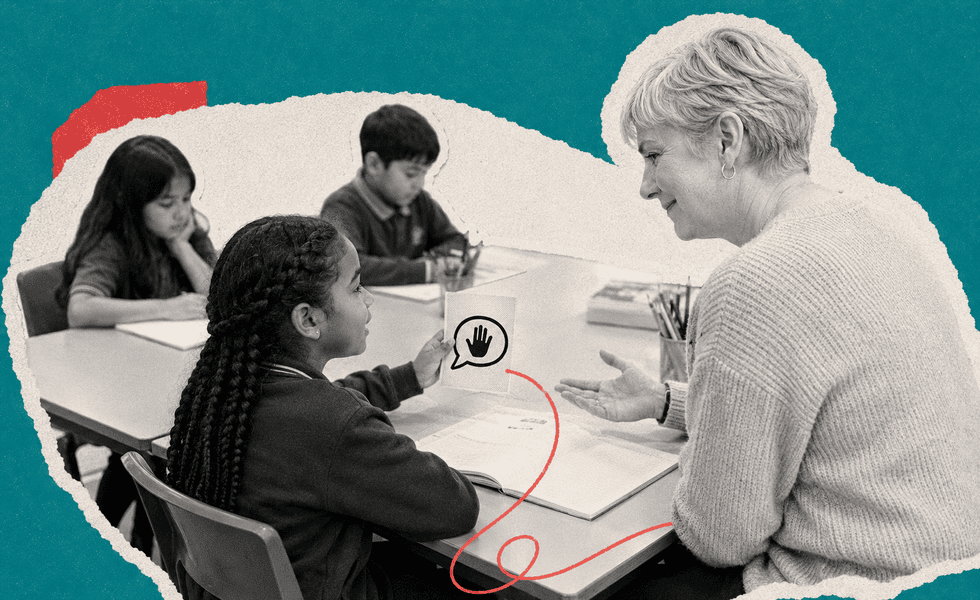
| The child does not ask for help | They do not know what to say or when to ask | Practise help-seeking phrases or provide a visual help card |
| The child avoids reading or writing | The task repeatedly requires more effort than adults can see | Explore the underlying literacy and language skills |
| The child participates less in groups | Processing several voices and formulating a response is difficult | Provide preparation time or a smaller-group option |
These are possibilities, not conclusions. The same behaviour can have different meanings for different children.
How does winter wellness fit into the picture?
Sleep, nutrition, illness, movement and predictable routines can influence how ready a child feels to participate in learning.
During winter, disrupted sleep, seasonal illness and changes in activity can make an already demanding school day feel harder. Supporting everyday wellbeing can create a stronger foundation for participation.
However, routines should not be used to explain away a difficulty that continues.
If a child remains worried, avoids the same tasks or needs significantly more support even when rested and comfortable, it may be time to look more closely at what the task requires.
What can parents do?
Start with curiosity, not correction
Choose a calm moment rather than beginning the conversation during homework frustration.
Try asking:
- “Which part felt hardest today?”
- “Did the instructions make sense?”
- “Was there a moment when you got stuck?”
- “What helped, even a little?”
- “Would you rather tell me, show me or draw it?”
- “What would make that task feel more manageable?”
Children might communicate more openly while walking, drawing, playing or doing something alongside an adult.
Validate before reassuring
When a child says, “I’m bad at reading”, it is natural to respond, “No, you’re not!”
But immediate reassurance can sometimes end the conversation before the child explains what happened.
Try:
“It sounds like reading felt really difficult today. Was it the words, understanding the story or having to read in front of someone?”
Validation does not mean agreeing that the child cannot do something. It means showing that their experience has been heard.
Separate the child from the difficulty
Use language that describes the task without defining the child.
Instead of:
“You’re not trying.”
Try:
“Getting started seems difficult today. Let’s work out what the first step is.”
Instead of:
“You’re bad at spelling.”
Try:
“Some of these spelling patterns are still unfamiliar.”
Instead of focusing only on results, notice strategies such as asking for clarification, using a visual support, returning to a task or communicating the need for a break.
Make asking for help more concrete
“Ask for help if you need it” can be too broad.
Children might benefit from practising specific messages:
- “Can you show me the first step?”
- “I don’t understand this word.”
- “Can you say that again?”
- “Can I see an example?”
- “I need more time.”
- “Can I answer another way?”
These messages can be communicated through speech, writing, gesture, sign or AAC.
Talk with the teacher
Families and teachers see children in different settings. Bringing those observations together can make patterns clearer.
Ask:
- Which tasks does my child approach confidently?
- When do they seem most hesitant?
- Are they asking for help?
- What happens during group work?
- Is the difficulty new or ongoing?
- What classroom supports have helped?
- Are there changes in friendships or participation?
The Australian Government’s guidance on family–school partnerships emphasises the different knowledge and experience that families and educators bring to supporting learning and wellbeing.
When might a speech pathologist help?
Consider speaking with a speech pathologist when changes in confidence appear alongside difficulties with:
- understanding instructions or questions
- learning and using vocabulary
- finding words
- explaining ideas
- organising sentences or stories
- reading comprehension
- spelling or written language
- recognising and working with sounds in words
- asking for clarification
- participating in classroom conversations
- communicating needs through speech, AAC, gesture or other methods
Healthdirect Australia explains that speech pathologists support areas including speaking, listening, understanding language, reading, writing and social communication.
A speech pathology assessment can help identify which communication skills are supporting the child and where barriers may be affecting participation.
Support should not be about making a child appear more typical. It should respect the child’s communication preferences, strengths and ways of learning while making school tasks more accessible.
When should families consider broader wellbeing support?
A loss of school confidence is not automatically a mental health concern. But additional support may be appropriate when changes are persistent or include:
- frequent worry about school
- headaches or stomach aches around school time
- sleep difficulties
- withdrawal from activities or friendships
- intense distress about mistakes
- repeated school refusal
- negative statements that extend beyond a particular task
- significant changes in mood or behaviour
The Raising Children Network’s information about school refusal outlines signs that families may notice and encourages early collaboration with the school and relevant professionals.
Depending on the concern, families might speak with the child’s teacher, school wellbeing team, GP, psychologist, paediatrician or another appropriate professional.

Confidence can grow when children feel understood
A child does not need to feel confident before receiving support.
Sometimes confidence begins to grow after the task becomes more accessible, communication is respected and the child experiences adults working with them rather than judging them.
The goal is not to remove every challenge or prevent every mistake. It is to help the child understand that getting stuck does not define their ability—and that asking for support is part of learning.
If your child’s confidence has changed alongside difficulties with communication, language, reading or written learning, Speakable Speech Pathology can help you explore what may be contributing and discuss respectful, practical next steps.
Which of these signs have you noticed?