Halloween Language Play: Building Vocabulary, Grammar and Sentences Through Spooky Fun
Halloween brings plenty of opportunities for imagination. There are costumes to describe, characters to invent, pumpkins to decorate and spooky stories to tell.
And while children are busy playing, they are also using language in meaningful ways.
Halloween language activities for children do not need to feel like structured practice. Everyday conversations around costumes, decorations and pretend play can naturally create opportunities to learn new words, combine ideas and build longer, more detailed sentences.
The goal is not to turn Halloween into homework. It is simply to notice the language opportunities that are already there — and join in.
Halloween brings new words to life
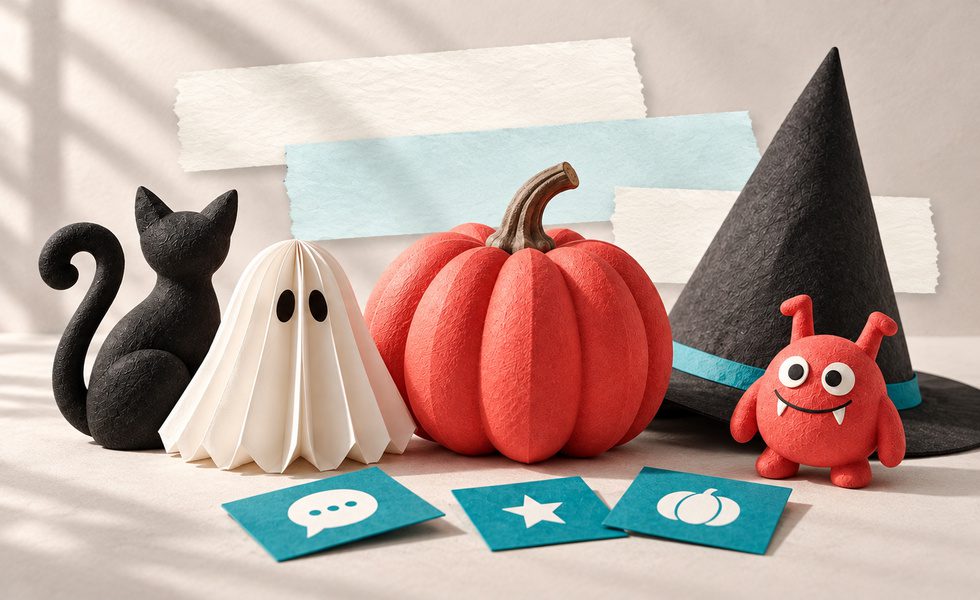
Halloween has its own collection of interesting words: pumpkin, costume, spooky, skeleton, witch, ghost, cobweb, creepy, enormous, tiny, disappear, float, crawl and many more.
Children are more likely to understand and remember new vocabulary when words are connected to something they can see, touch, do or experience.
Instead of asking a child to memorise Halloween words, adults can simply use them naturally during play.
For example:
- “That is an enormous pumpkin.”
- “The spider is crawling across the web.”
- “Your ghost is floating through the room.”
- “That costume looks very spooky.”
Hearing the same word in different situations helps children gradually build a richer understanding of what it means and how it can be used.
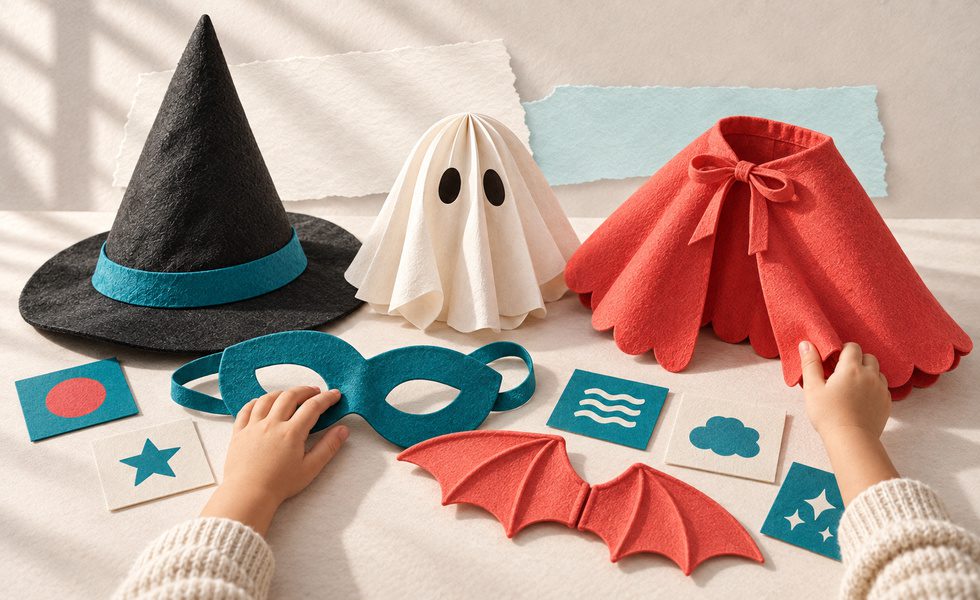
Costumes are perfect for describing
Choosing or talking about a costume creates an easy opportunity to explore descriptive language.
Rather than asking lots of questions, adults can model descriptions themselves.
A child might say:
“A witch.”
An adult could respond:
“Yes, a witch with a tall black hat.”
Or:
“A spooky witch with a purple cape.”
The child’s original message is still accepted. The adult is simply adding a little more language around it.
Descriptions can include:
Colour: orange, black, purple, green
Size: tiny, enormous, long, short
Texture: furry, rough, smooth, sticky
Appearance: scary, funny, strange, sparkly
Parts: wings, claws, cape, mask, tail
This kind of modelling can help children hear how individual words can be combined into richer phrases and sentences.
From a few words to a fuller sentence
Children do not need to repeat an adult’s sentence for language modelling to be useful.
If a child says:
“Ghost flying.”
You might naturally reply:
“The little ghost is flying over the house.”
If they say:
“Spider.”
You could say:
“The big black spider is crawling on the pumpkin.”
This is sometimes called expanding a child’s language. The adult keeps the child’s idea and adds a little more information.
There is no need to correct every sentence or ask the child to “say it properly”.
Language can grow through hearing meaningful examples again and again during enjoyable interactions.
Build a spooky sentence together
Halloween characters can also make sentence building playful.
You can start with three simple ideas:
Who?
A ghost.
Doing what?
Is hiding.
Where?
Behind the pumpkin.
Together, they become:
“The ghost is hiding behind the pumpkin.”
Then you can add another detail:
“The tiny ghost is hiding behind the enormous orange pumpkin.”
There is no single correct sentence. A vampire can dance in the kitchen. A pumpkin can fly to the moon. A skeleton can eat spaghetti.
The sillier the idea, the more memorable the conversation may become.
Spooky stories support more than vocabulary
Halloween is also a fun setting for simple storytelling.
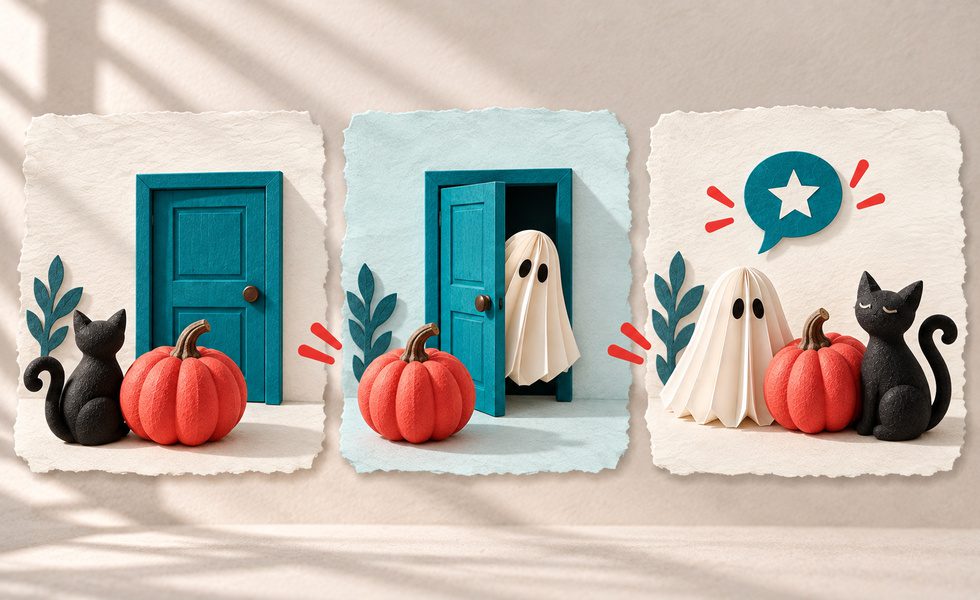
Stories give children opportunities to connect sentences and think about what happens first, next and last.
You might invent a story together:
“A little ghost found a pumpkin.”
Then add:
“The pumpkin started talking.”
And then:
“They went looking for a witch.”
Adults can model sequencing words such as:
first, then, next, after that, finally.
For children who find storytelling difficult, pictures, toys or drawings can make the ideas more concrete.
You could line up three Halloween pictures and talk about what happens in each one. The story does not need to be complicated. Even three connected events are an opportunity to practise organising ideas into a sequence.
Follow the child’s imagination
Language play tends to work best when adults follow what the child is already interested in.
One child might love dressing up. Another may want to draw monsters. Someone else might be fascinated by pumpkins but have no interest at all in spooky characters.
All of these can create opportunities for communication.
A Halloween activity does not need to last a certain amount of time, produce a particular number of words or end with a completed worksheet.
Conversation itself can be the activity.
If a child introduces an unexpected idea, follow it.
If the witch suddenly becomes a firefighter, the story can change.
If the monster decides that he does not want to be scary and would rather make cupcakes, even better.
These unexpected turns encourage children to explain, imagine, negotiate and connect ideas — all important parts of language development.
Questions are useful — but conversation matters too
When adults want to encourage language, it can be tempting to ask question after question:
“What is this?”
“What colour is it?”
“What is the witch doing?”
“Where is the ghost?”
Questions certainly have a place, but children also benefit from simply hearing adults comment, describe and wonder aloud.
Instead of:
“What colour is the pumpkin?”
You might say:
“I found a tiny green pumpkin!”
Instead of:
“What is the ghost doing?”
Try:
“That ghost looks like he’s hiding. I wonder what he’s hiding from?”
This can make the interaction feel more like a shared conversation and less like a test.
Keep Halloween communication-friendly
Children experience Halloween differently.
Some love costumes, decorations, noise and surprises. Others may prefer watching from a distance, choosing a familiar activity or avoiding Halloween altogether.
There is no requirement to participate in a particular way.
Language opportunities can come from looking at a Halloween book, drawing a funny monster, talking about decorations seen on a walk or making up a story at home.
The most useful activity is one in which the child feels comfortable enough to engage and communicate.
Small conversations can build big language skills
Building language does not always require special materials or formal activities.
A pumpkin on the table can introduce a new adjective. A costume can start a conversation about describing. A toy ghost can inspire a sentence. Three silly pictures can become an entire story.
These everyday moments give children opportunities to hear and use vocabulary, grammar and increasingly complex sentences in a meaningful context.
So this Halloween, there is no need to turn play into a lesson.
Play, talk, describe, imagine — and see where the story goes.
If you have questions about your child’s speech, language or communication development, a speech pathologist can help you understand their individual communication strengths and support needs.