Raising Bilingual Children in Australia: Busting Language Delay Myths
Understanding what’s typical — and what actually matters in bilingual development.
💬 Introduction: When “Is this normal?” starts to appear
Raising a bilingual child in Australia can feel like a gift — but also, at times, a source of doubt.
Many parents start to wonder:
- “Should my child already be speaking more?”
- “Are two languages confusing them?”
- “Is mixing languages a problem?”
These questions are incredibly common.
And most of the time, the answer is reassuring:
👉 Bilingualism does not cause language delay.
What it does require is understanding how bilingual development actually works.
🧠 What Research Says About Bilingual Development
Children learning two languages are not learning less — they are learning differently.
According to child development research, bilingual children may:
- Use words from both languages in the same sentence
- Take slightly longer to express themselves early on
- Show uneven vocabulary across languages
👉 https://www.asha.org/public/speech/development/learning-two-languages/
This is not confusion — it’s part of how the brain organises multiple language systems.
💛 In simple terms:
A bilingual child might know the concept, but only have the word in one language — and that’s completely typical.
🧩 Common Myths About Bilingual Children (and the Reality)
❌ Myth 1: “Two languages will delay speech”
✔️ Reality:
Bilingual children follow the same developmental path — just distributed across two languages.
❌ Myth 2: “Mixing languages is a problem”
✔️ Reality:
Mixing languages (code-switching) is a normal and intelligent strategy.
It shows the child is using all available language resources to communicate.
❌ Myth 3: “We should stop the home language”
✔️ Reality:
Maintaining the home language supports:
- Emotional connection
- Identity
- Family relationships
- Overall language development
🧠 How Language Difficulties Can Still Appear
Bilingualism does not cause language difficulties —
but bilingual children can still have communication challenges, just like any other child.
What matters is how the difficulties appear.
Some signs to observe across both languages:
- Difficulty understanding instructions
- Limited vocabulary in both languages
- Trouble forming sentences
- Frustration when trying to communicate
👉 https://www.vic.gov.au/supporting-students-language-difficulties
💛 Important distinction:
If a child struggles in one language only, this is usually exposure-related.
If they struggle in both, it may be worth exploring further.
🏡 What Supports Healthy Bilingual Development at Home
You don’t need to choose one language over the other.
What matters most is quality and consistency.
Here’s what helps:
- Speak the language you are most comfortable with
- Create natural opportunities for both languages
- Read books in both languages
- Allow mixing without correcting constantly
- Focus on connection, not perfection
💛 Children learn language best through relationships — not pressure.
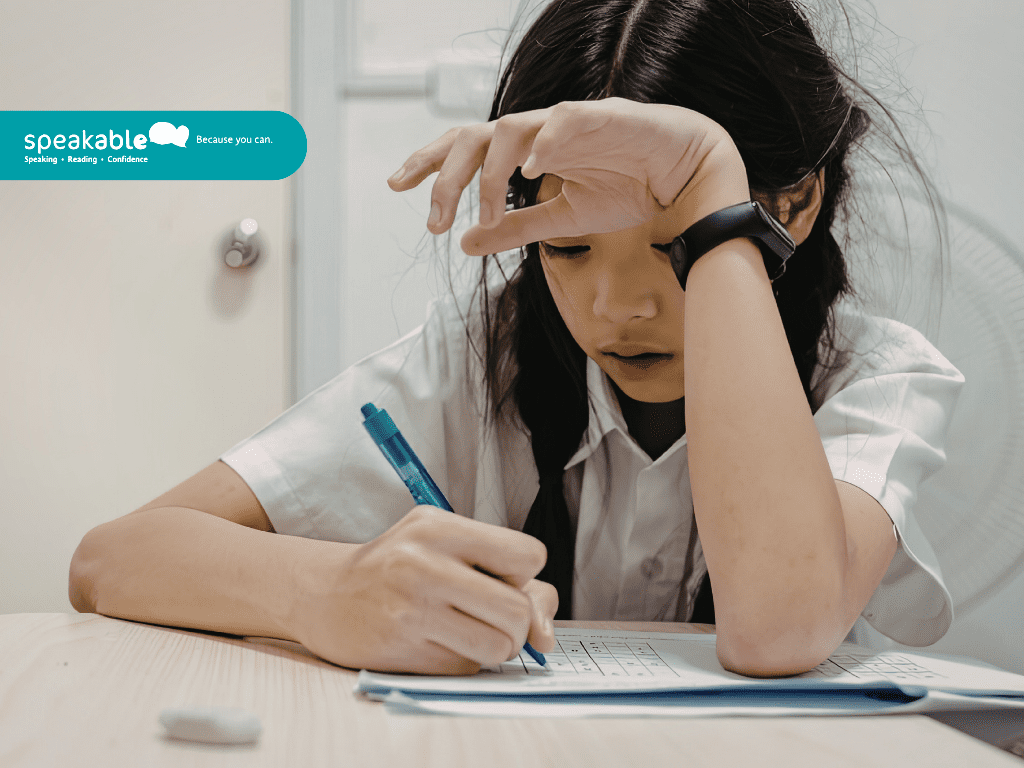
💛 When to Seek Support (Without Panic)
It’s okay to seek guidance early — not because something is wrong, but because understanding helps.
You might consider support if:
- Your child is hard to understand in both languages
- They rarely attempt to communicate
- They seem consistently frustrated when speaking
- Progress feels very slow over time
Early support is not about labelling —
it’s about making communication easier.
🌱 Final Thoughts: Two Languages, One Confident Communicator
Raising a bilingual child is not a risk —
it’s a long-term advantage.
Yes, the path can look different.
Yes, there may be moments of doubt.
But bilingual children are building something powerful:
👉 The ability to think, connect, and communicate across worlds.
And with the right support, they don’t just learn two languages —
they learn confidence.